Lavender Sachets: A Small Sewn Gift for Drawers and Closets
Sew small cotton sachets, fill them with dried lavender through a paper funnel, and close them with ladder stitch or a ribbon tie.
Tutorial at a glance
Materials
- Two 4 in (10 cm) squares of closely woven cotton per pillow sachet
- Two 4 x 6 in (10 x 15 cm) cotton rectangles per pouch sachet
- Dried lavender buds, about 2 to 3 tablespoons per sachet
- Sewing thread and a hand needle
- Pins or clips
- Fabric scissors and a ruler
- Sheet of paper for a funnel, and a spoon
- Narrow ribbon, about 12 in (30 cm)
- Iron
Lavender sachets are small fabric pockets filled with dried lavender buds and closed so the scent can pass through the weave. A sachet can sit in a drawer, hang from a closet rail or travel in a suitcase. Each one needs two small squares of cotton, a short seam and a spoonful or two of filling, which makes it a practical first sewing project and a good use for fabric scraps.
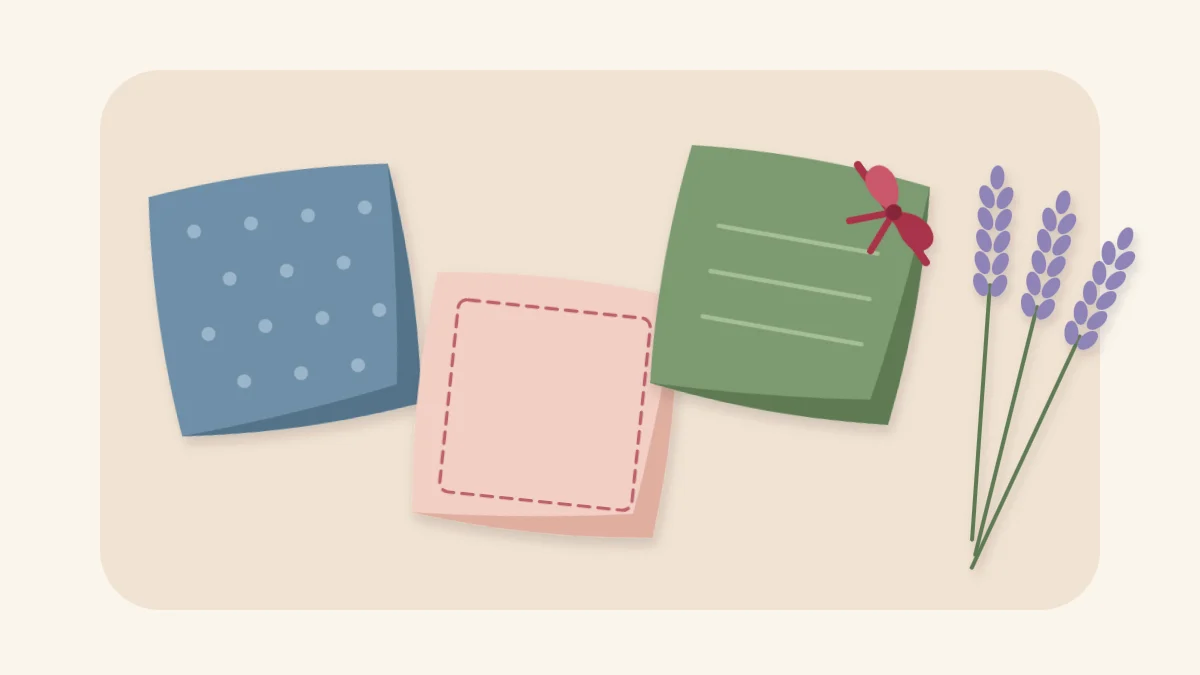
There are two shapes to choose from. The pillow is sewn shut and stays flat between folded clothes. The pouch is tied at the neck with ribbon, so it can be opened and refilled.
What You Need
- Quilting cotton or another light, closely woven cotton: two pieces per sachet (sizes in the table below)
- Dried lavender buds, about 2 to 3 tablespoons per sachet
- Sewing thread to match the fabric, and a hand needle
- Pins or clips, fabric scissors and a ruler
- A sheet of paper and a spoon for filling
- Narrow ribbon, about 12 in (30 cm), for the pouch shape or a hanging loop
- An iron
Choose a fabric with a tight weave. Lavender buds are small and their stems are sharp, and a loose weave lets bits work their way out. Pre-wash and press the cotton so any finish is removed and the pieces lie flat.
| Shape | Cut two pieces | Finished size | Closed with |
|---|---|---|---|
| Pillow | 4 x 4 in (10 x 10 cm) | About 3.5 in (9 cm) square | Ladder stitch |
| Pouch | 4 x 6 in (10 x 15 cm) | About 3.5 x 5.25 in (9 x 13.5 cm) before tying | Ribbon tied around the neck |
The seam allowance throughout is 1/4 in (6 mm).
Sew the Pocket
Both shapes start as a pocket sewn on three sides. Small, close stitches matter here more than on most projects, because the filling is fine enough to slip through a gap.
- Pouch only: fold the top. Fold one short edge of each pouch piece 1/2 in (1.3 cm) to the wrong side and press. This fold becomes the rim of the pouch.
- Pin. Place the two pieces right sides together with the edges even and pin them.
- Stitch three sides. Sew down one side, across the bottom and up the other side, 1/4 in (6 mm) from the edge, leaving the top open. Use backstitch, with stitches about 1/8 in (3 mm) long, or a short machine stitch. The guide to hand-sewing stitches for gifts shows how backstitch forms a solid line.
- Secure the ends. Take two or three stitches on top of each other at the start and finish, because the open edge is handled a lot during filling.
- Clip and turn. Trim the two bottom corners diagonally, close to the stitching but not through it. Turn the pocket right side out, push the corners out gently with a blunt pencil and press.
Fill It with a Paper Funnel
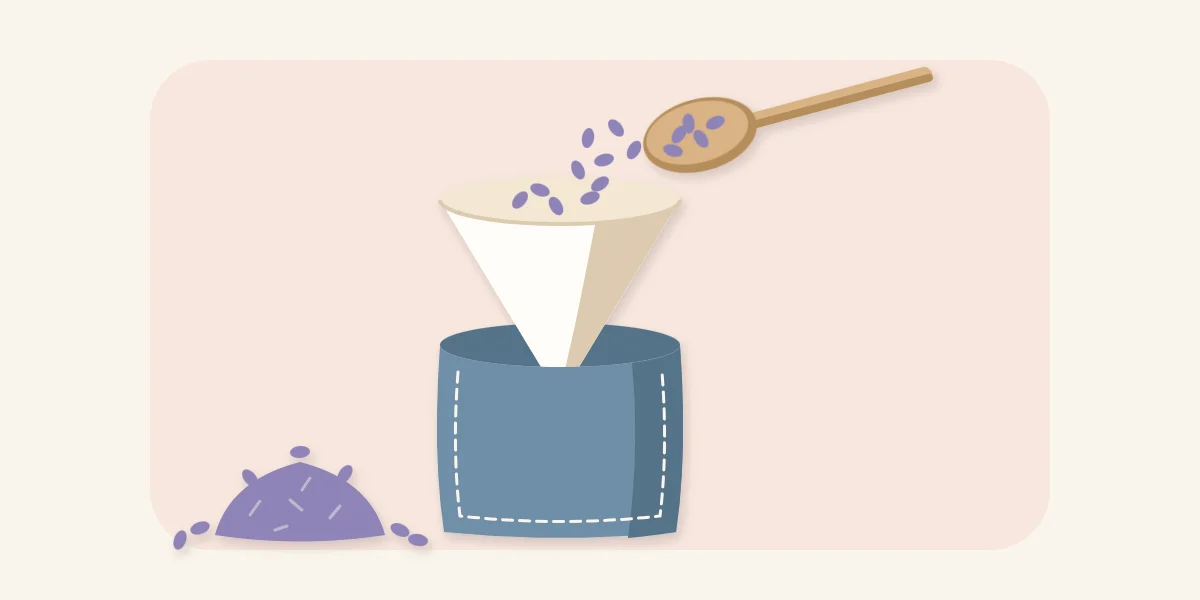
Pouring buds straight from a spoon into a small opening scatters them across the table. A funnel rolled from a sheet of paper solves that. Roll the paper into a cone with an opening about as wide as a finger at the narrow end, and tape it or simply hold it in shape.
Stand the pocket upright and set the narrow end of the funnel inside the opening. Spoon the lavender into the funnel and tap the paper so the buds slide down. Work over a tray so spilled buds can be tipped back in.
Fill a pillow sachet about two-thirds full. A sachet packed tight is hard to close and strains its seams. Fill a pouch only to about half its height so there is loose fabric left to gather for the tie.
Close It: Pillow or Pouch
Pillow, closed with ladder stitch
Fold the raw edges of the opening 1/4 in (6 mm) to the inside so they line up with the rest of the seam, and pin or clip the folds together. Shake the filling down to the bottom so it is out of the way.
Thread a needle, knot the end and bring the needle out through one fold from the inside to hide the knot. Take a small stitch along the fold on one side, then cross straight over and take a small stitch along the fold on the other side. The crossing threads look like the rungs of a ladder until you pull the thread, when the folds draw together and the stitches disappear. Finish with two small stitches in the same place.
Pouch, tied with ribbon
Gather the pouch about 1.5 in (4 cm) below the rim, wrap the ribbon around the gathers twice and tie a firm double knot, then a bow. The knot holds the pouch shut; the bow is decoration. To refill the pouch later, untie the ribbon.
Watch out
A tied pouch can loosen and spill if it is pulled about. Use the stitched pillow shape for a sachet that will hang on a hanger or be packed in luggage.

Variations
- Hanging loop: fold a 4 in (10 cm) piece of ribbon in half and pin it inside the pocket at one corner, loop pointing inward and ends level with the raw edges, before sewing the three sides. The seam catches the ends.
- A set: cut several sachets from coordinating scraps. Similar squares and the same seam are the starting point for a set of four fabric coasters.
Common Problems
- Buds leaking from a seam: the stitches are too long or a corner was clipped through the stitching. Sew over the seam again with smaller stitches.
- Stems poking through the fabric: the weave is too open. Pick the larger stems out of the filling or sew a second pocket from tighter cotton.
- The scent has faded: squeeze or roll the sachet between your hands to crush the buds slightly and release more fragrance. When squeezing no longer helps, replace the filling.
Giving the Sachets
Three sachets stacked and tied with ribbon make a tidy set, and they fit inside a small cotton drawstring bag that can be reused.
Always say what is inside. Some people are sensitive to fragrance or to particular plants, so write “filled with dried lavender” on the tag and describe the sachet simply as scented. Add that it should be kept dry and out of reach of pets and small children, who may chew it. The guide to wrapping a handmade gift covers tags and care notes for filled items like this one.
Frequently asked questions
How much dried lavender goes into one sachet?
A pillow sachet made from 4 in (10 cm) squares holds about 2 to 3 tablespoons when filled two-thirds full. Leaving some space keeps the sachet flat and makes the last edge easier to close. A pouch is filled to about half its height so the neck can be gathered and tied.
What can be done when a sachet loses its scent?
Squeeze or roll it between your hands to crush the buds a little, which releases more fragrance. Once that no longer works, open the ribbon on a pouch and replace the filling, or unpick a short length of seam on a pillow, refill it and close it again with ladder stitch.
Which fabric works for a lavender sachet?
A light, closely woven cotton such as quilting cotton holds the fine buds and lets the scent through. Loosely woven fabric allows stems and bits to work out through the weave. Pre-wash and press the fabric before cutting.