Handmade Gift Ideas by Season: What to Make and When to Start
A season-by-season overview of small handmade gifts, with planning habits for drying stages, test pieces and batch work.
Tutorial at a glance
Planning handmade gift ideas by season solves two problems at once: it narrows the choice of project to something that fits the time of year, and it tells you roughly when to begin. A handmade gift cannot be picked up at the last moment. Paint has to dry, glue has to set, fabric has to be washed first, and a first attempt often has to be redone.
This guide matches projects on this site to the four seasons and the occasions that fall in them, then sets out a few planning habits that apply whatever you make. It gives no fixed schedule, because working speed, product instructions and free time differ from one maker to the next. The practical rule is to allow extra time at every stage.
Projects Matched to Each Season
Each season below has two projects that suit its occasions, its weather or what is happening in the garden and the home at that point in the year.
| Season | Occasions | Projects |
|---|---|---|
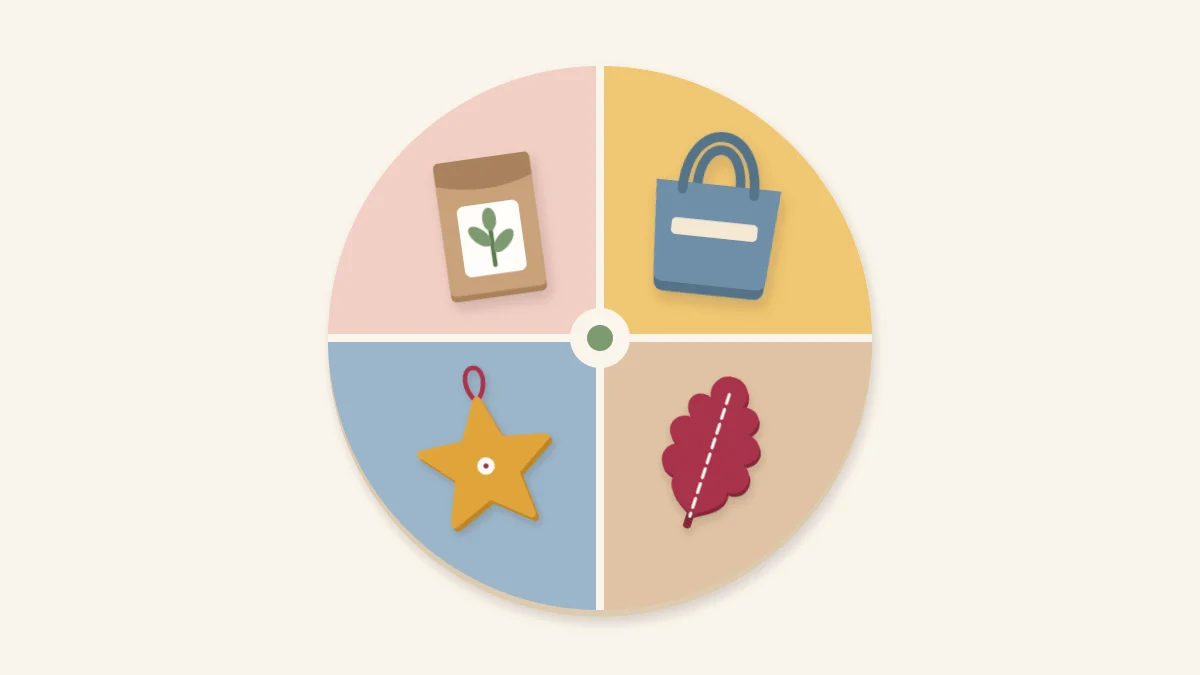
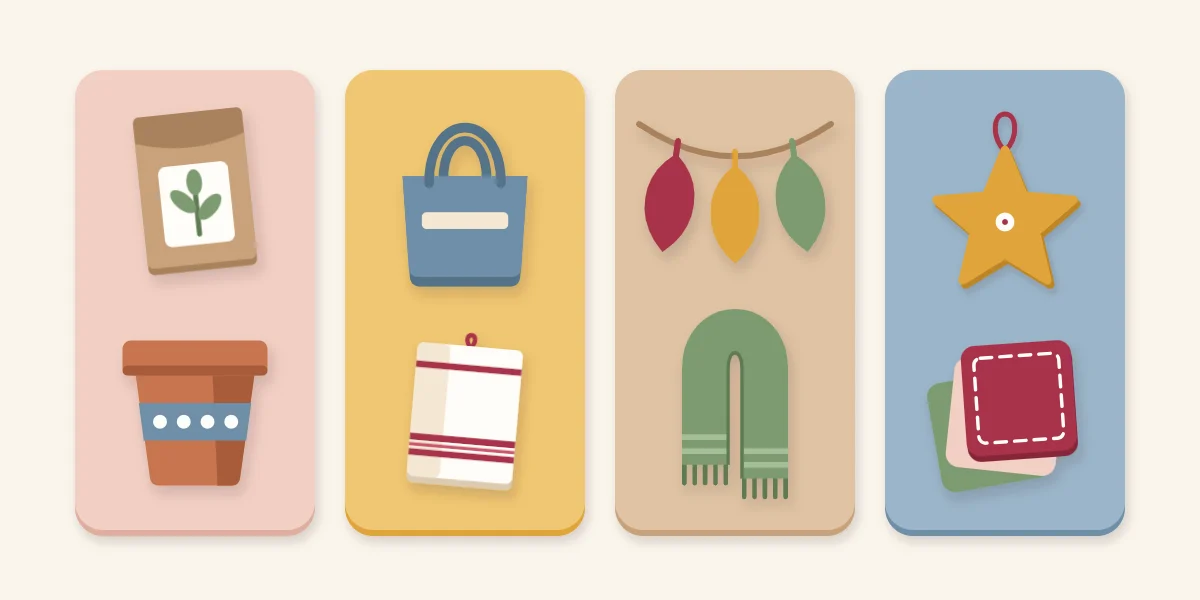
| Spring | Mother’s Day, Easter, the start of the planting season, housewarmings | Handmade seed packets; painted terracotta pot |
| Summer | Father’s Day, graduations, weddings, host gifts for cookouts and visits | Stenciled monogram tote bag; stamped tea towels |
| Fall | Back to school, teacher gifts, Thanksgiving, the first cold weather | Felt leaf garland; no-sew fleece scarf |
| Winter | Christmas and other winter holidays, New Year, Valentine’s Day | Felt Christmas ornaments; a set of fabric coasters |
Birthdays, thank-you gifts and new-home gifts fall in every season, so treat the table as a starting point. A scarf is most useful when the weather turns cold, and seeds are most useful just before they can be sown, but a set of coasters or a tote bag fits any month.
Spring: Seeds and Pots
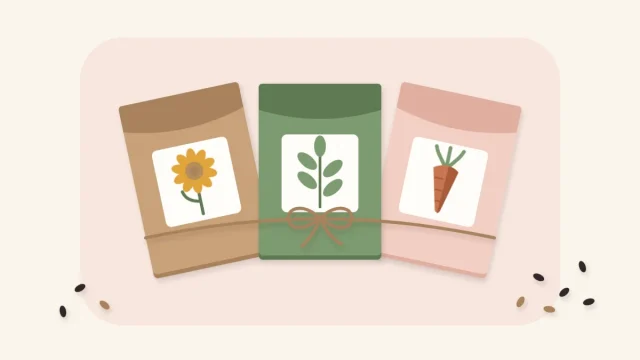
Handmade seed packets are paper envelopes folded from a simple template and filled with seeds. They need to be finished before the sowing period printed on the original seed packet, so check that information before choosing varieties. The paper work has one waiting stage: the glued seams must dry before the packets are filled.
A painted terracotta pot has more waiting built in. The pot must be clean and fully dry before painting, and each coat of acrylic paint, and any sealer, needs the drying period given on its label before the next step. Painting several pots in one session costs little extra effort, since the waiting is the same for one pot as for five.
Summer: Fabric Paint Projects
The stenciled monogram tote bag and stamped tea towels both use fabric paint on plain cotton or linen. Warm, dry weather is convenient for these because pre-washed fabric and painted pieces can air-dry on a line or a rack. Both projects start with washing and drying the fabric, which removes sizing that can stop paint from soaking in evenly.
Fabric paints differ in how they are set and when the item can first be washed. Read the label before buying, plan around its instructions, and include a care note that repeats them. A personalized item also needs one more check at the start: confirm the initial or name before cutting the stencil.
Fall: Felt and Fleece
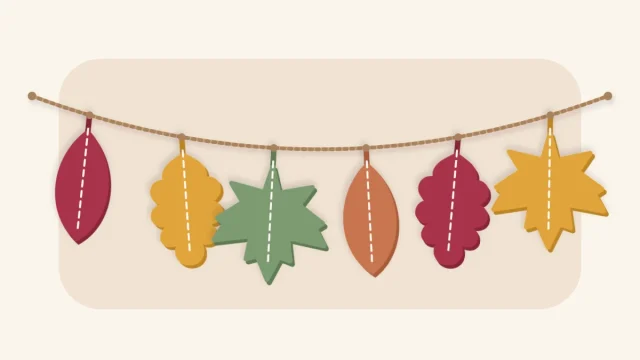
A felt leaf garland is mostly cutting, followed by a line of hand stitching on each leaf. It has no drying stages, so it can be picked up and put down in short sessions. Cut all the leaves first, then stitch them all, then string them. Working in batches like this keeps the shapes consistent.
The no-sew fleece scarf is the shortest project on the list: a strip of fleece with fringe cut into both ends. It suits a late start, or a moment when another gift has gone wrong and a replacement is needed. Buy fleece once the fabric shops have their cold-weather stock in, when the color range is widest.
Winter: Ornaments and Sets
Felt Christmas ornaments are small, but each one is decorated, stitched all the way around by hand and stuffed, and most people make them in sets of three or more. Hand sewing in quantity is the stage makers most often underestimate. Begin while the holidays still feel far away, especially if the ornaments are going into the mail.
Fabric coasters are sewn in sets of four and go faster if every coaster is taken through one step before moving to the next: cut all the squares, sew all the seams, turn and press all of them, then topstitch. Lavender sachets and a felt heart pocket for Valentine’s Day use the same small-scale sewing and fit the same part of the year.
Planning Principles That Apply All Year
- Start earlier than seems necessary. Count back from the day the gift must be handed over or posted, not from the occasion itself, and then add a margin for mistakes.
- Make one test piece first. A single coaster, one ornament or one stamped scrap shows how the materials behave and how long your own hands need. Only then is it sensible to estimate the full set.
- Batch similar steps. Cutting everything at once, then sewing everything at once, keeps sizes consistent and saves setting up tools repeatedly.
- Treat drying and setting as fixed. Paint, glue and sealer cannot be hurried safely. Follow each product’s label and plan other steps around the wait.
- Buy materials before the rush. Seasonal colors of felt, ribbon and paper sell out close to the occasion they are meant for.
- Leave room for wrapping. A tag, a care note and suitable packaging are part of the project, not an afterthought.
Tip
Keep a short list for each gift: who it is for, the date it must leave your hands, and the stage it has reached. A list makes it obvious which project to pick up next.
When Plans Slip
If a project is running late, simplify it before abandoning it. Make a set of two instead of four, leave off the appliqué, or choose plain fringe instead of knotted fringe. Do not shorten a drying or setting stage to catch up: tacky paint smears in wrapping paper, and glue that has not set lets go in transit.
Watch out
Gifts sent by mail need the most margin of all, and seeds may be restricted across some borders. Check the rules and the carrier’s own guidance before committing to a mailed gift.
Frequently asked questions
When should a handmade holiday gift be started?
Earlier than seems necessary. Count back from the date the gift has to be handed over or posted, then add a margin for mistakes and for any drying or setting stages on the product labels. Making one test piece first gives a realistic idea of how long the full set will take you.
Which handmade gifts have no drying stages?
Projects that are only cut and sewn, such as a felt leaf garland, felt ornaments, fabric coasters and a no-sew fleece scarf, have no paint or glue to wait for. They can be worked in short sessions and packed as soon as the last stitch is fastened off.
How can a late handmade gift be rescued?
Simplify the project instead of rushing it. Make a smaller set, skip optional decoration or switch to a project with fewer stages. Do not cut short a drying or setting stage, because paint and glue that have not finished can smear or let go once the gift is wrapped.