How to Wrap a Handmade Gift: Presentation, Tags, and Care Notes
Wrapping methods for handmade items, from kraft paper and twine to a knotted fabric square, plus what to write on the tag and in a short care note.
Tutorial at a glance
Materials
- Kraft paper and tape
- Twine or ribbon
- A square of cotton fabric, a large napkin or a tea towel
- A box and tissue paper
- Cardstock tags or a small card for the care note
- A pen that does not smear on your tag
Knowing how to wrap a handmade gift is partly about paper and ribbon and partly about information. A bought item arrives with a label that says what it is, what it is made of and how to look after it. A handmade one has none of that unless you add it, so the wrapping needs to carry a tag and a short care note as well as protect the item.
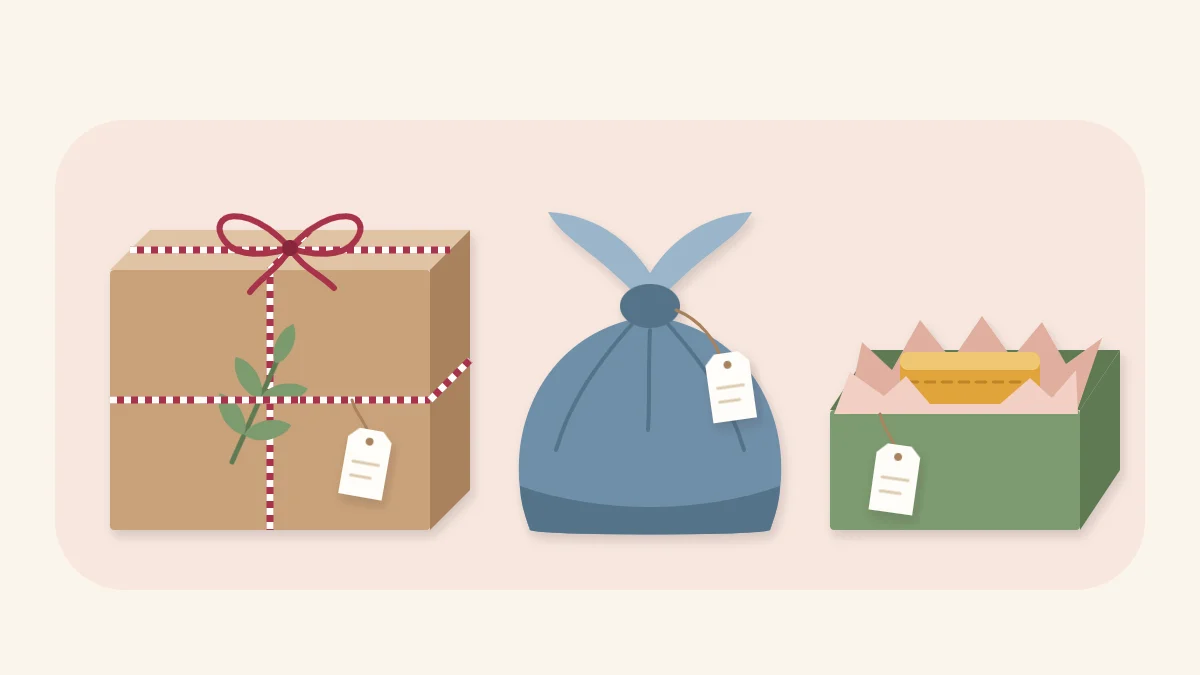
The methods here use plain materials: kraft paper and twine, a square of fabric, a box with tissue, and a paper band for sets.
Match the Wrap to the Gift
Soft things lose their shape if wrapped tightly, flat paper things bend, and small things get lost in a large parcel. The table pairs common project types with a wrap that suits their shape and the facts worth writing down.
| Gift type | Suggested wrap | What to write on the note |
|---|---|---|
| Sewn fabric items (coasters, pillow cover, tissue holder) | Bundle with twine or a paper band, or a knotted fabric wrap | Fabric type; wash according to the fabric’s care label |
| Painted or stenciled fabric (tote bag, tea towels) | Fold with the design facing out, tie with twine | Fabric and type of paint; washing steps copied from the paint’s label |
| Felt items (bookmark, keychain, ornaments) | Small box with tissue, or a paper bag | Felt type; small parts where relevant; keep away from candles and heat |
| Scented sachets | Paper bag or tissue-lined box | What the filling is, for anyone with fragrance sensitivities |
| Magnets and other tiny pieces | Mounted on a card inside a closed box | Contains small magnets; keep away from young children and pets |
| Paper items (notebook, stationery, photo book) | Flat box or rigid envelope, tissue between layers | Paper type; keep dry |
Kraft Paper and Twine
Brown kraft paper is stiff and creases sharply, which suits boxed gifts and firm, regular shapes.
- Set the box on the paper and cut a piece long enough to go around it with an overlap of about 1 in (2.5 cm), and wide enough that each end covers a little more than half the depth of the box.
- Wrap the paper around, fold the raw edge under for a clean line and tape the overlap along the centre of the base.
- At each end, push the top edge down, crease the two side flaps inward, and fold the bottom flap up. Tape it.
- Run a bone folder along every edge of the box to sharpen the creases.
- Wrap twine around the long way, cross it underneath, bring it around the short way and tie on top. Slip the tag onto the twine before the final knot.
Boxes with Tissue, and Bags
A box is the right choice for anything that would be crushed or bent: stuffed felt shapes, a hand-bound notebook, a set of note cards. Line the box with two sheets of tissue laid crosswise so that four ends hang over the sides. Place the item in the middle and fold the ends over it in turn. Choose a box only slightly larger than the gift, and fill any gap with crumpled tissue so the item cannot slide.
For soft, light gifts a bag is quicker than a box. You can fold a paper gift bag from wrapping paper to the size you need, or sew a cotton drawstring gift bag that stays in use after the gift is opened.
The Knotted Fabric Wrap
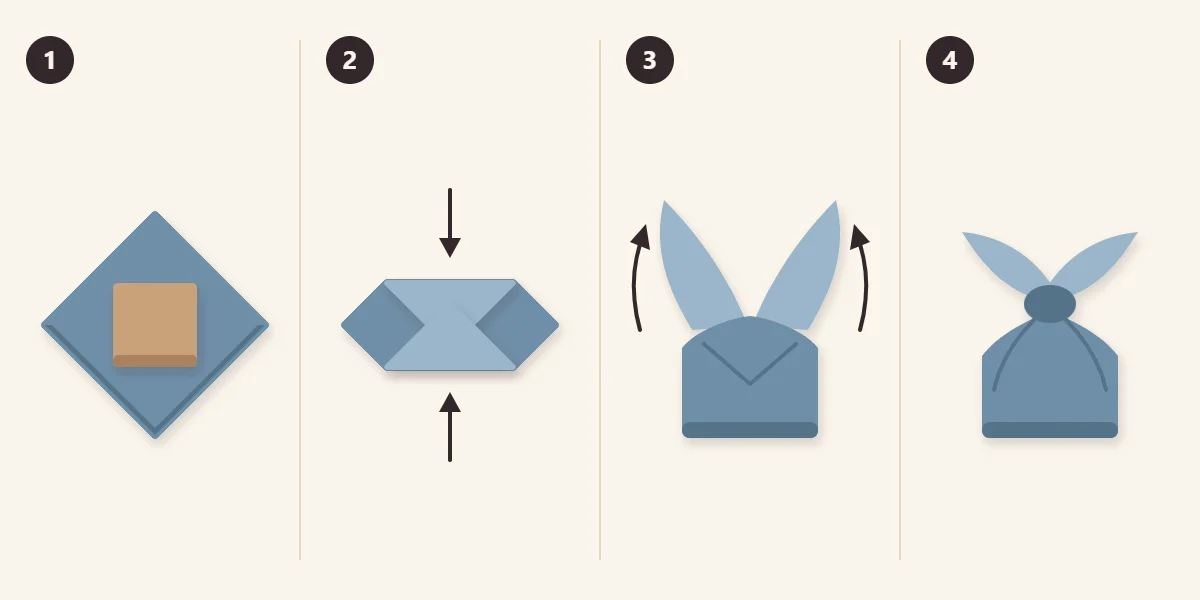
A square of cloth knotted on top wraps boxes and soft bundles without tape, and the cloth itself is reusable. A cotton square, a large napkin or a tea towel all work. The square needs to be large: its diagonal should be roughly three times the longest side of the box.
- Lay the cloth as a diamond, wrong side up, with one corner pointing toward you. Set the box in the centre, its sides parallel to the diagonals.
- Fold the near corner over the box and tuck the tip underneath if it is long. Fold the far corner over toward you so it covers the first.
- Gather the left and right corners and bring them up over the top of the box, smoothing the folds at the sides so they lie flat against the ends.
- Tie those two corners together in a knot on top. A square knot, right over left and then left over right, sits flat and holds without slipping.
If the knot will not close, the cloth is too small for the box; choose a larger square. Thin, soft fabrics knot more easily than stiff canvas.
Bundling a Set
Sets such as coasters, note cards or sachets look tidier held together than loose in a box. Stack them squarely and tie twine around both directions like a parcel, or cut a paper band about 2 in (5 cm) wide, wrap it around the middle of the stack and glue or tape the overlap at the back. The band also gives you a flat place to write what the set contains.
The Tag: What It Is and What It Is Made Of
The front of the tag carries the name. The back is where a handmade gift gets its label. Two short lines are enough: what the item is, and what it is made of. “Corner bookmark, wool-blend felt and cotton floss” is enough. Naming materials matters for people who avoid wool, particular scents or certain fibers.
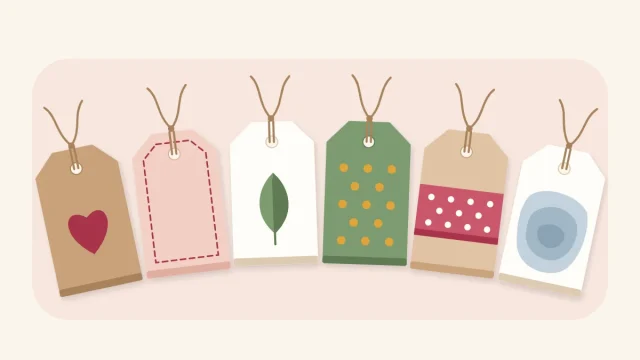
Any plain tag will do. To match the tag to the gift, the guide to personalized gift tags from cardstock shows six ways to finish one.
Writing a Short Care Note
A care note is a small card or a few lines on the back of the tag. Keep it factual and copy from the source instead of guessing:
- Washing. Repeat what the fabric’s care label or the bolt label said. For painted or stamped fabric, copy the washing instructions from the paint’s label.
- Fillings. For lavender sachets and anything else that is filled or scented, state what is inside.
- Small parts and sharps. Note buttons, magnets, split rings, needles and pins, and say that the item should be kept away from young children and pets.
- Heat. For felt and paper decorations, add a line about keeping them away from candles, hot lights and heaters.
Tip
Write the care note when you buy the materials, while the labels are still in front of you. A photo of each label saves guessing later.
Before sealing the parcel, check that the name on the tag is spelled correctly and the note is inside or attached.
Frequently asked questions
What should a care note for a handmade gift say?
Name what the item is and what it is made of, then give washing advice copied from the fabric's care label or the paint's label. Add what any filling is, and mention small parts, magnets or sharps where they apply. If you are unsure how a material behaves in the wash, say so and suggest spot cleaning.
How big should the cloth be for a knotted fabric wrap?
Use a square whose diagonal is roughly three times the longest side of the box. That leaves enough length for two corners to fold over the box and the other two to meet and tie on top. If the knot will not close, turn the box or use a larger square.
How do you wrap a soft handmade gift without a box?
Fold it into a neat rectangle and either tie it with twine or a paper band, wrap it in a square of fabric knotted on top, or slip it into a paper or drawstring bag. Avoid wrapping stuffed or padded items tightly, which flattens them. Attach the tag to the twine or the knot.